
Runners significantly benefit from incorporating strength training, enhancing performance and reducing injury risk. Expert coaches and programs, like WeightWatchers, offer guidance.
Why Runners Need Strength Training
Running primarily develops cardiovascular endurance, often neglecting crucial muscle groups. Strength training addresses this imbalance, fortifying muscles vital for efficient running mechanics and injury prevention. A well-structured program, potentially found in a WeightWatchers-style guide, enhances power, speed, and stamina.
It combats muscle fatigue, improves running economy, and stabilizes joints. Ignoring strength work can lead to overuse injuries. Building a foundation of strength allows runners to handle increased mileage and intensity, ultimately unlocking their full potential. Consider expert-designed plans for optimal results.
Benefits of Weight Training for Running Performance
Weight training boosts running performance through increased power and efficiency. Stronger muscles translate to a more forceful stride, improving speed and reducing energy expenditure. Programs, similar to those offered by WeightWatchers, emphasize functional strength, directly applicable to running movements.
It also enhances endurance by delaying fatigue and improving running economy. Furthermore, strength training strengthens connective tissues, minimizing injury risk. A focused program can lead to faster times, longer distances, and a more enjoyable running experience. It’s a vital component of holistic runner development.

Assessing Your Current Fitness Level
Evaluate your running history, mileage, and identify any existing strength imbalances before starting a weight training program for optimal results.
Evaluating Running History and Mileage
Begin by honestly assessing your running background. Consider your total years running, average weekly mileage, and any recent increases in volume. A sudden jump in mileage without adequate strength can lead to injury.
Document past injuries, noting their type and recovery time. This informs exercise selection and intensity.
Analyze your typical running terrain – hills, trails, or roads – as this impacts muscle demands.
Understanding these factors helps tailor a weight training program to address your specific needs and prevent overtraining.
Identifying Strength Imbalances
Common imbalances in runners include weaker glutes, core, and hip abductors compared to quadriceps. This can contribute to form breakdown and injuries like runner’s knee.
Simple self-tests, such as single-leg squats or hip abduction exercises, can reveal weaknesses. Observe for asymmetry – does one side feel significantly harder or less stable?
Consider a professional assessment from a physical therapist or certified trainer for a more detailed analysis.
Addressing these imbalances is crucial for efficient running and injury prevention.
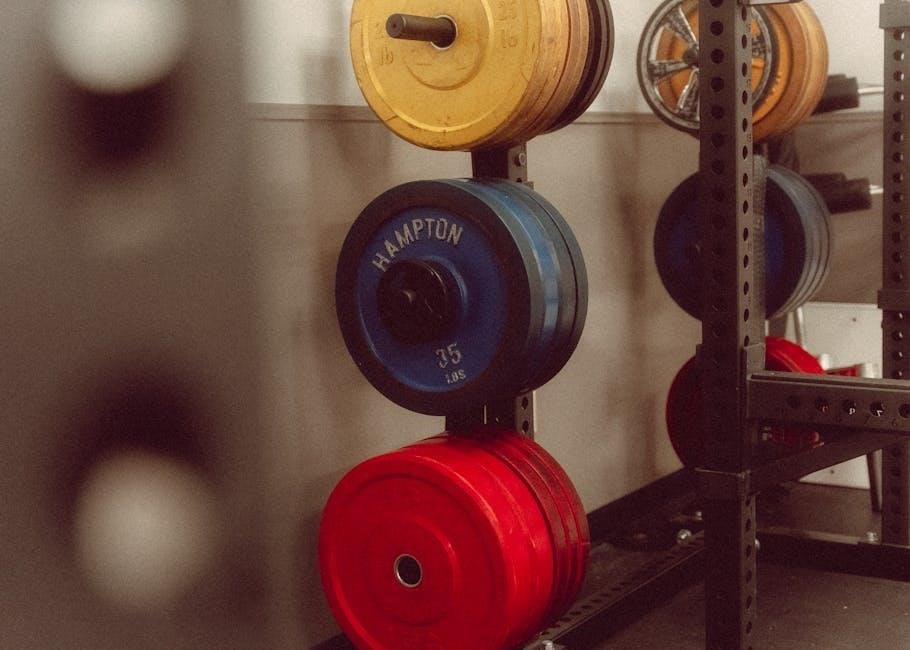
Core Strength Exercises for Runners
A strong core stabilizes the spine and improves running efficiency. Planks, Russian twists, and bird dogs are foundational exercises for runners.
Plank Variations
Planks are excellent for core stability, crucial for efficient running. Begin with a standard plank, maintaining a straight line from head to heels. Progress to side planks, engaging obliques for rotational control. Add challenges like plank jacks or forearm planks to increase intensity. Consider incorporating plank with shoulder taps, alternating hand reaches to enhance stability and coordination. Remember proper form: engage your core, keep your back flat, and avoid sagging hips. Holding each variation for 30-60 seconds, completing 3-4 sets, builds a resilient core, minimizing injury risk and maximizing running performance.
Russian Twists
Russian twists effectively target obliques and rotational core strength, vital for running efficiency. Sit with knees bent and feet slightly elevated, leaning back slightly. Holding a dumbbell or medicine ball (optional), twist your torso from side to side, touching the weight to the ground. Maintain a straight back and engage your core throughout the movement. To increase difficulty, elevate your feet further or use a heavier weight. Perform 3-4 sets of 15-20 repetitions per side; This exercise improves rotational power and stability, enhancing running form and preventing imbalances.
Bird Dog Exercise
Bird dog exercises are excellent for strengthening the core and improving stability, crucial for runners. Start on your hands and knees, ensuring a neutral spine. Simultaneously extend one arm forward and the opposite leg backward, maintaining balance and core engagement. Avoid arching your back or rotating your hips. Hold for a few seconds, then return to the starting position and repeat on the other side. Perform 3-4 sets of 10-12 repetitions per side. This builds core endurance and enhances proprioception, vital for injury prevention.

Lower Body Strength Exercises
Strong legs are fundamental for runners! Focus on squats, lunges, glute bridges, and calf raises to build power, endurance, and prevent injuries effectively.
Squats (Bodyweight & Weighted)
Squats are a cornerstone exercise for runners, building strength in quads, hamstrings, and glutes – crucial for powerful strides and uphill climbs. Begin with bodyweight squats, focusing on proper form: feet shoulder-width apart, chest up, and descending as if sitting in a chair.
As strength increases, introduce weighted squats using dumbbells or a barbell. This progressive overload enhances muscle development and power. Maintain a controlled descent and explosive ascent. Prioritize depth, aiming for thighs parallel to the ground, while keeping your back straight and core engaged. Proper form prevents injuries and maximizes benefits.
Lunges (Forward, Reverse, Lateral)
Lunges are fantastic for runners, improving single-leg strength, balance, and stability – all vital for efficient running mechanics. Forward lunges target quads and glutes, while reverse lunges emphasize glutes and hamstrings with reduced knee stress.
Incorporate lateral lunges to strengthen adductors and abductors, enhancing lateral stability and preventing injuries. Maintain an upright torso and controlled movement throughout each lunge variation. Add dumbbells for increased intensity as you progress. Focus on a full range of motion and proper form.
Glute Bridges
Glute bridges are a cornerstone exercise for runners, directly strengthening the gluteal muscles – crucial for powerful hip extension and efficient running. This exercise improves running economy and reduces strain on hamstrings and knees.
Perform glute bridges by lying on your back with bent knees, lifting your hips off the ground, squeezing your glutes at the top. For added challenge, incorporate a resistance band around your thighs or hold a dumbbell across your hips. Focus on controlled movements and full glute activation.
Calf Raises
Calf raises are essential for runners, strengthening the gastrocnemius and soleus muscles – vital for propulsion and shock absorption during each stride. Strong calves contribute to a more powerful push-off and reduced risk of Achilles tendon injuries.
Perform calf raises by standing on a slightly elevated surface, rising onto your toes, and slowly lowering back down. Progress by adding weight using dumbbells or a barbell. Variations include seated calf raises to target the soleus muscle specifically.

Upper Body Strength Exercises
Strengthening the upper body improves running form and efficiency, contributing to better posture and arm drive for enhanced performance.
Push-Ups
Push-ups are a foundational exercise requiring no equipment, making them ideal for runners. They build upper body strength, crucial for maintaining proper form and preventing fatigue during runs. Begin with standard push-ups, focusing on controlled movements and maintaining a straight line from head to heels.
Variations, like incline push-ups (easier) or decline push-ups (harder), can adjust the difficulty. Aim for 3 sets of 8-12 repetitions, prioritizing form over quantity. Consistent push-ups strengthen chest, shoulders, and triceps, contributing to a more powerful and efficient running stride.
Rows (Dumbbell or Band)
Rows counteract the forward-leaning posture common in running, strengthening the back muscles and improving posture. Use dumbbells or resistance bands for this exercise. Maintain a straight back, hinge at the hips, and pull the weight towards your chest, squeezing your shoulder blades together.
Perform 3 sets of 10-15 repetitions. Focus on controlled movements and engaging your back muscles throughout the exercise. Strong back muscles enhance running efficiency and reduce the risk of upper body injuries, contributing to a more balanced physique.
Overhead Press
Overhead presses build shoulder and upper back strength, crucial for maintaining good running form and arm drive. Utilize dumbbells for this exercise, ensuring a controlled motion. Start with a light weight and press upwards, keeping your core engaged and back straight.
Complete 3 sets of 8-12 repetitions. Proper form is paramount to avoid shoulder injuries. Strong shoulders contribute to efficient arm swing and overall running power, enhancing endurance and speed. Consider band variations for beginners.

Creating a Weight Training Program
Design a program with consistent sessions, appropriate sets/reps, and progressive overload for optimal gains. WeightWatchers emphasizes sustainable habits for lasting results.
Frequency of Training Sessions
For runners, two to three weight training sessions weekly is generally ideal, allowing sufficient recovery between runs and strength work. Beginners should start with two sessions, focusing on foundational movements.
Intermediate and advanced runners can increase to three, strategically scheduling sessions to avoid interference with key running workouts. Consider splitting workouts – one focused on lower body, another on core and upper body;
WeightWatchers promotes consistency, and this applies to strength training too; regular, manageable sessions yield better results than infrequent, intense ones. Listen to your body and adjust frequency as needed;
Sets and Repetitions for Runners
Runners should prioritize strength endurance over maximal strength. Aim for 2-3 sets of 10-15 repetitions for most exercises. This rep range builds muscular endurance, crucial for maintaining form throughout long runs.
Beginners can start with 2 sets, gradually increasing to 3 as strength improves. For power exercises like jump squats, reduce reps to 6-8 with a focus on explosive movement.
WeightWatchers emphasizes balanced programs, and this applies to rep schemes – finding what supports your overall fitness goals and prevents overtraining.
Progressive Overload Principles
Progressive overload is key to continued improvement. Gradually increase the demands on your muscles over time. This can be achieved by increasing weight, reps, sets, or decreasing rest time.
Small, incremental increases are more effective than large jumps. Aim to increase weight by 2.5-5% each week, if possible. Listen to your body and avoid pushing through pain.
WeightWatchers promotes sustainable habits, and progressive overload aligns with this – building strength gradually for long-term success.

Sample Weight Training Program (Beginner)
Beginner runners should focus on foundational strength. Programs, like those from WeightWatchers, emphasize building a base with bodyweight and light weights.
Week 1-4: Foundation Building
During weeks one through four, prioritize establishing a solid strength base. Focus on mastering proper form with bodyweight exercises like squats, lunges, and planks. Incorporate light dumbbell rows and overhead presses, utilizing two to three sets of ten to twelve repetitions. WeightWatchers-style programs emphasize consistency over intensity initially.
Prioritize core engagement in every exercise. This phase aims to prepare your muscles for more challenging workouts, minimizing injury risk and maximizing future gains. Remember to listen to your body and adjust as needed, focusing on controlled movements.
Week 5-8: Increasing Intensity
Weeks five to eight mark a progression in your weight training. Gradually increase the weight lifted for exercises like squats, lunges, and rows. Introduce more challenging plank variations and consider adding resistance bands for glute bridges. Aim for three sets of eight to ten repetitions, focusing on controlled eccentric movements.
Like programs from WeightWatchers, this phase builds upon the foundation established earlier. Prioritize progressive overload – consistently challenging your muscles to stimulate growth and improve running performance. Continue to prioritize proper form to prevent injuries.

Sample Weight Training Program (Intermediate)
Intermediate runners should focus on strength and power, incorporating heavier weights and explosive movements. Programs like WW can help guide this progression.
Week 9-12: Strength & Power Focus
This phase prioritizes building maximal strength and explosive power crucial for running performance. Increase weight lifted by 5-10% each week, focusing on compound exercises like squats, lunges, and deadlifts. Incorporate plyometrics – jump squats, box jumps – twice weekly to enhance power. Reduce repetitions to 6-8 per set, maintaining proper form. WeightWatchers resources can offer tailored guidance. Ensure adequate recovery with nutrition and rest. Monitor progress and adjust weights accordingly, preventing plateaus and maximizing gains. This builds a robust foundation for faster, more efficient running.
Important Considerations
Prioritize proper warm-up routines, cool-downs, and technique to prevent injuries. Nutrition plays a vital role in muscle recovery and overall performance gains.
Warm-up and Cool-down Routines
Dynamic stretching is crucial before weight training; leg swings, torso twists, and arm circles prepare muscles for exertion. A five to ten-minute cardio warm-up, like light jogging, increases blood flow.
Cool-downs should involve static stretches, holding each for thirty seconds, targeting major muscle groups worked. This improves flexibility and reduces muscle soreness.
WeightWatchers emphasizes holistic wellness, including mindful movement, which aligns with the importance of proper warm-up and cool-down practices for injury prevention and optimal recovery. Consistency is key!
Proper Form and Technique
Prioritizing form over weight lifted is paramount to prevent injuries and maximize effectiveness; Maintain a neutral spine, engage your core, and control movements throughout each exercise.
Seek guidance from a qualified trainer to learn correct technique, especially when starting. Utilize mirrors to self-assess and ensure proper alignment.
WeightWatchers promotes a mindful approach to wellness, extending to exercise; focusing on quality of movement is vital. Incorrect form negates benefits and increases risk.
Nutrition for Muscle Recovery
Post-workout nutrition is crucial for muscle repair and glycogen replenishment. Prioritize protein intake (20-30g) within 30-60 minutes of training to support muscle protein synthesis.
Complex carbohydrates are essential for restoring energy stores depleted during exercise. WeightWatchers emphasizes balanced nutrition, incorporating whole foods for optimal recovery.
Hydration is also key; replenish fluids lost through sweat. Adequate nutrition, alongside a well-structured program, maximizes gains and minimizes soreness.
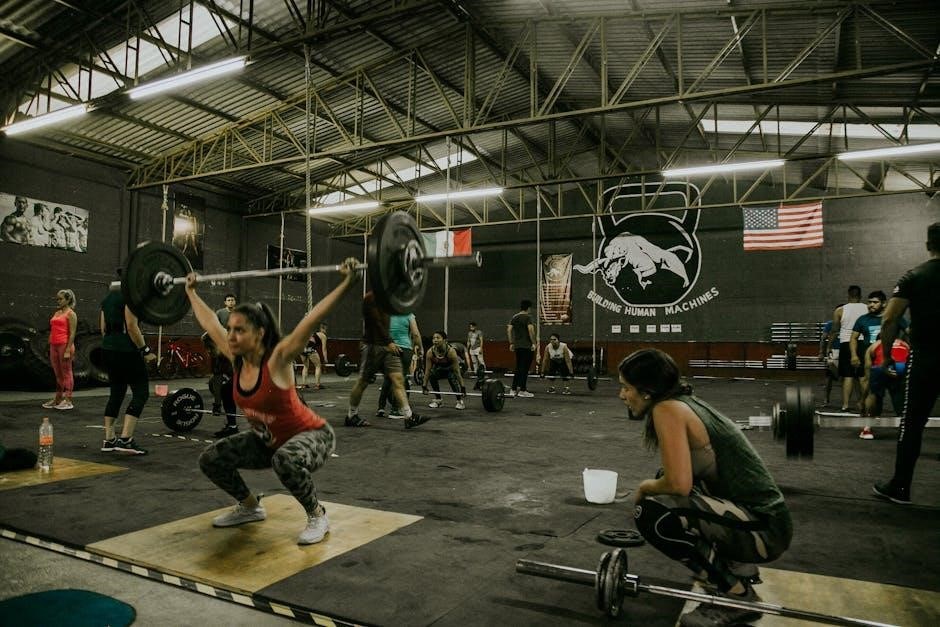
Avoiding Common Mistakes
Overtraining and ignoring imbalances hinder progress. WeightWatchers promotes sustainable habits; listen to your body and prioritize proper form for injury prevention.
Overtraining and Injury Prevention
Carefully monitor training volume to avoid overtraining, a common pitfall for runners adding weight training. Gradual progression is key; don’t increase intensity or frequency too quickly. Listen to your body – pain is a signal! Prioritize rest and recovery days.
Ignoring warning signs can lead to stress fractures or muscle strains. WeightWatchers emphasizes holistic wellness, including mindful movement. Proper form during exercises, as highlighted in many programs, minimizes injury risk. Consider incorporating cross-training to reduce repetitive stress on running muscles.
Ignoring Muscle Imbalances
Uneven strength development can significantly increase injury risk for runners. A comprehensive weight training program addresses imbalances between opposing muscle groups – quads vs. hamstrings, for example. Neglecting weaker areas creates compensatory patterns, leading to strain.
Many WeightWatchers-style programs advocate for balanced fitness. Regularly assess your strength levels to identify weaknesses. Targeted exercises, like single-leg work, can correct imbalances. Ignoring this aspect compromises running form and efficiency, potentially causing long-term issues.
Resources for Runners
Explore WeightWatchers’ blog for expert tips and recipes. Numerous PDF guides and online communities offer support for building a tailored program.
Recommended PDF Guides & Programs
Numerous downloadable resources cater to runners seeking structured weight training. Many fitness websites offer free beginner PDFs focusing on foundational strength. WeightWatchers provides comprehensive wellness programs, potentially including strength components. Look for guides emphasizing core stability, lower body power, and injury prevention tailored for running.
Consider programs from reputable running coaches or physical therapists. These often detail progressive overload principles and specific exercise progressions. Search for PDFs detailing periodization strategies to align training with race schedules. Remember to prioritize proper form over lifting heavy weights initially, ensuring safe and effective training.
Online Communities and Support
Engaging with online running communities provides valuable support and motivation for your weight training journey; Platforms like Reddit’s r/running and various Facebook groups offer forums to discuss programs and share experiences. WeightWatchers’ online community fosters accountability and provides expert guidance.
Seek feedback on your form and training plans from experienced runners. Many coaches offer virtual consultations. Utilize online resources to troubleshoot challenges and stay motivated. Remember to critically evaluate information and prioritize advice from qualified professionals.
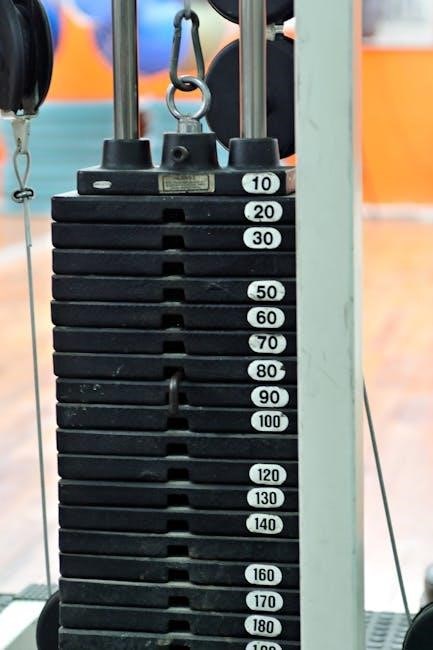
Tracking Progress and Adjusting the Program
Monitor running performance and strength gains to refine your program. Adapt training based on individual needs and recovery, ensuring continued improvement.
Monitoring Performance Metrics
Regularly track key running metrics like pace, distance, and race times to assess the impact of your weight training. Note any improvements or plateaus. Simultaneously, monitor strength gains – increases in weight lifted, repetitions completed, or sets achieved.
Keep a detailed training log, recording workouts, perceived exertion, and any muscle soreness. This data helps identify patterns and potential overtraining. WeightWatchers emphasizes tracking for success, and this applies to strength training too. Analyze trends to adjust the program, ensuring continuous progress and preventing injury.
Adapting to Individual Needs
Recognize that every runner responds differently to weight training. Factors like running experience, mileage, and injury history necessitate program adjustments. Beginners should start conservatively, prioritizing form over weight. More experienced runners might require increased intensity or specialized exercises.
Listen to your body and modify the program based on feedback. WeightWatchers promotes personalized plans, and the same principle applies here. Don’t hesitate to scale back volume or switch exercises if you experience pain. Prioritize recovery and tailor the program to your unique physiological needs.